
Finding Motivation When Everything Feels Pointless
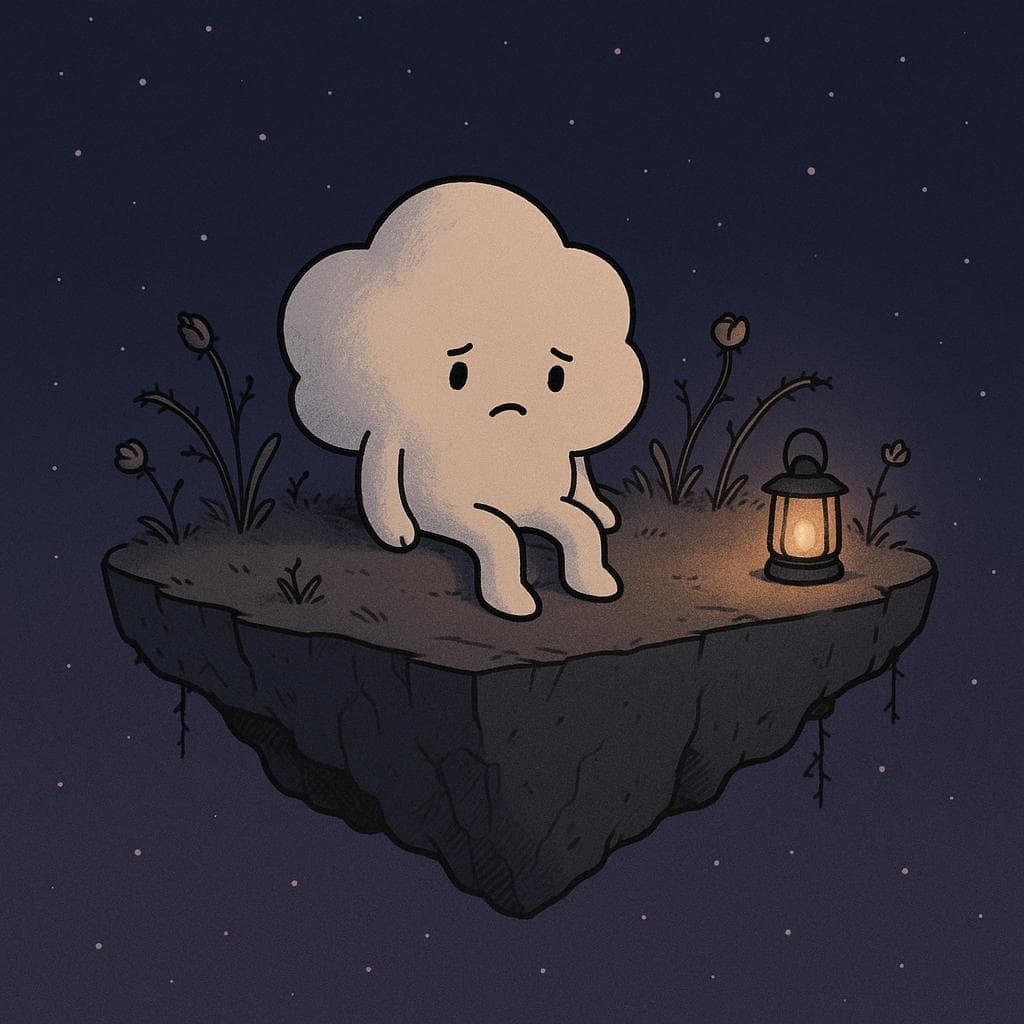
If you’ve hit that “what’s the point?” phase where even brushing your teeth feels like a debate, you’re not alone. A lot of students and young adults quietly live in this space—still going to class or work, still answering “I’m fine,” but inside everything feels heavy and kind of pointless.
When low mood, anxiety, ADHD, and constant stress pile up, your brain can start running a background script: “Nothing matters. Why bother?” That script is loud—and it makes motivation feel impossible.
This guide isn’t about “finding your passion” or rewriting your whole life. It’s about something much smaller: how to move when everything feels pointless, in ways that are kind to your nervous system and actually doable.
Key Takeaways:
✓ Feeling like everything is pointless is often a sign your brain and body are overloaded, not that you’re lazy or broken
✓ Motivation usually follows action, not the other way around—tiny, low-pressure steps can gently restart that cycle
✓ Breaking tasks into “bare minimum” versions helps when ADHD, anxiety, or low mood make regular goals feel impossible
✓ Connecting actions to values (not vibes) makes things feel less pointless, even when your mood doesn’t change right away
✓ You don’t have to do this alone—tools, routines, and support systems can hold some of the weight when your motivation disappears
1. Why everything feels pointless
When everything feels pointless, it’s easy to jump to “I’m the problem.” But zoom out for a second.
The bigger picture
We’re living in a time where:
- School is more competitive and expensive than ever
- News cycles are full of climate dread, violence, and instability
- Social media constantly shows everyone else “thriving”
Research backs up how heavy this all is. Globally, low mood, anxiety, and behavioural challenges are now among the leading causes of difficulty for adolescents and young adults (WHO, 2025). In U.S. data, about one in three young adults 18–25 had some kind of emotional or behavioural condition in the past year (SAMHSA, 2024).
So if your brain is looking at the world and going, “What’s the point?”—that reaction makes sense. You’re not overreacting. You’re responding to a lot.
What’s happening in your brain
When you’re dealing with low mood, anxiety, or ADHD, a few things often show up:
- Reward system slowdown – Things that used to feel good don’t hit the same. Your brain’s “this is worth it” signal is quieter.
- Anxiety noise – Thoughts like “What if I fail?” or “It won’t matter anyway” show up before you even start.
- Executive function overload – ADHD can make planning, starting, and finishing tasks feel like trying to launch a rocket, not just open a doc.
That combo can make everything feel like too much. Not because you don’t care, but because your brain is tired, flooded, or both.
You’re not imagining it
Surveys show a lot of young people feel this way. For example, college surveys have found that over 60% of students meet criteria for at least one emotional or behavioural challenge in a given year (APA, 2022). That’s not a small “unlucky” group—that’s most people around you.
In summary:
Feeling like everything is pointless is often a signal that your system is overloaded, not proof that nothing actually matters. Your brain is trying to protect you by shutting things down a bit—even if it doesn’t feel helpful.
2. Rethinking motivation
The myth: “I need to feel motivated first”
A lot of us were taught this order:
- Feel inspired
- Get motivated
- Take action
- Feel better
For anxiety, ADHD, or low mood brains, it usually works more like:
- Take a tiny action
- Feel a 1% shift
- Get a small hit of “okay, maybe”
- Take another tiny action
Motivation often follows action, not the other way around. The problem is, when everything feels pointless, even “tiny action” sounds too big.
So we shrink it even further.
The “bare minimum” rule
When your brain says “what’s the point,” the goal isn’t “crush the day.” It’s “keep the system online.” Think of it as putting your life in maintenance mode instead of “growth mode.”
Ask yourself:
“What is the absolute bare minimum version of this that still counts?”
Examples:
- Instead of “clean my room” → “put trash in one bag”
- Instead of “write my paper” → “open the doc and type one sentence”
- Instead of “work out” → “stand up and stretch for 30 seconds”
This sounds almost stupidly small. That’s the point. You’re not aiming for impressive—you’re aiming for possible.
Why small counts
Your brain tracks patterns. When you do one tiny thing, you’re sending this signal:
“Even when everything feels pointless, I can still move a little.”
Over time, that pattern can chip away at the “I’m stuck forever” story, even if your mood is still low.
In summary:
You don’t have to wait to feel motivated. You can start with the smallest version of action your brain can tolerate, and let motivation show up later—or not. The action still counts.
3. Tiny actions for “pointless” days
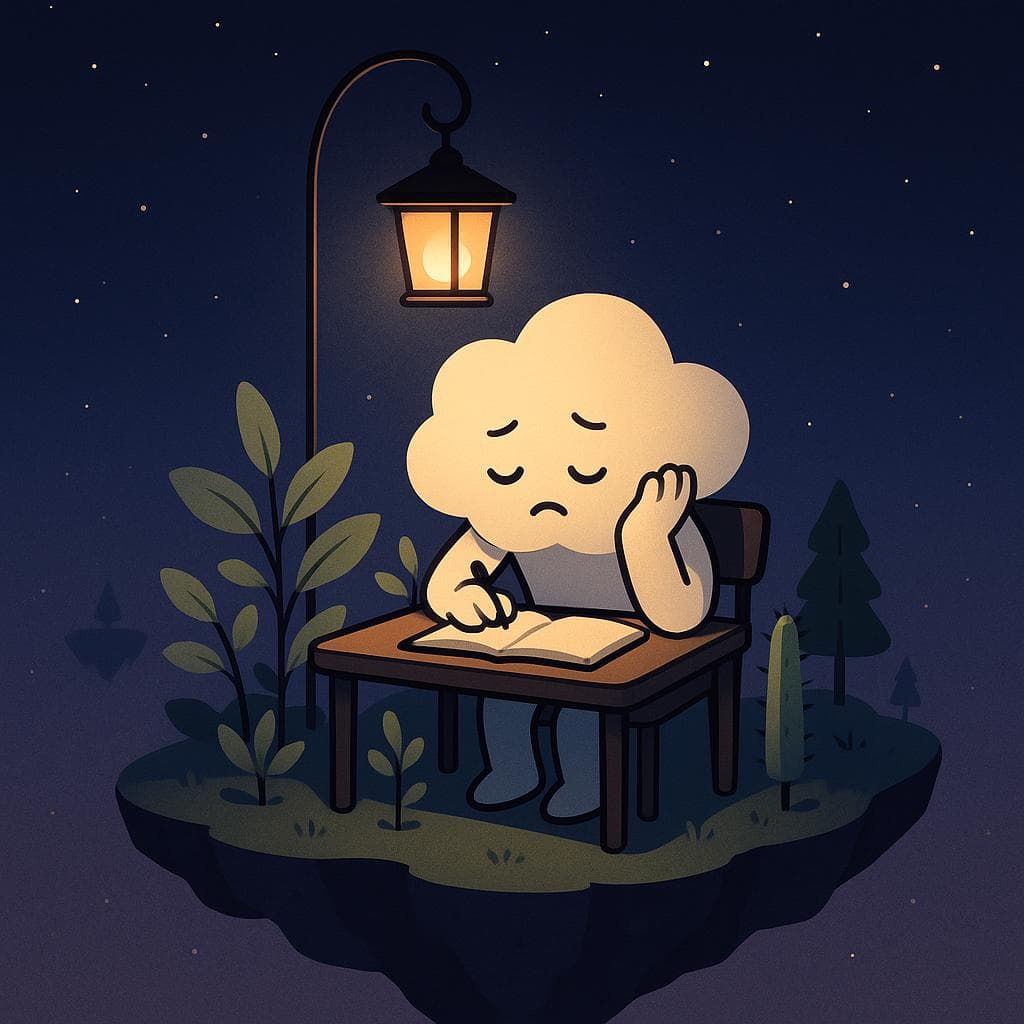
You do not need to try all of these. Skim and grab 1–3 that feel least awful.
Body-level resets
Sometimes the fastest way to shift “nothing matters” is through your body, not your thoughts.
-
Change your position
- Sit up if you’re lying down, or lie down if you’ve been sitting for hours.
- Put your feet on the floor and notice the contact for 10 seconds.
-
Do a 20-second rinse
- Wash your face or hands with cool or warm water.
- Notice the temperature and sensation—no need to “be mindful” perfectly.
-
Micro-movement
- Roll your shoulders three times.
- Stand, reach your arms overhead, then let them drop.
- Walk to the bathroom and back.
These don’t fix your life. They just remind your nervous system that movement is still possible.
“Pointless” but grounding tasks
When everything feels pointless, it can actually help to do something that doesn’t need a reason.
- Stack three books by size
- Match a few socks
- Wipe one surface (desk, nightstand, phone screen)
- Water one plant or refill a water bottle
These small actions give your brain a tiny “I did something” hit without asking it to care about the future.
ADHD- and anxiety-friendly starters
If ADHD and anxiety are part of the mix, starting is usually the hardest part. Try:
-
The two-minute version
- Set a 2-minute timer.
- Work on one thing until it goes off.
- Stop when it ends—even if you “could” keep going.
-
The “first 10%” rule
Only do the first 10% of a task:- For reading: just open the article and read the first paragraph.
- For an email: just write “Hi [Name],” and save as draft.
- For homework: just write the title and your name.
-
Externalize the start
Ask a friend or roommate:- “Can you sit on call while I open this assignment?”
- “Text me in 10 minutes and ask if I started my reading.”
This is not “needing hand-holding.” It’s using your environment to support an ADHD/anxiety brain, which is smart.
When low mood is loud
If you’re in a stretch of persistent sadness, even those might feel like too much. In that case, think micro-habits—things that take 30 seconds or less.
| Area | 30-second action | Why it helps |
|---|---|---|
| Hydration | Take 5 gulps of water | Gentle energy and focus support |
| Hygiene | Brush teeth for 30 seconds | Small win, physical comfort |
| Connection | Send “thinking of you” to one person | Reminds you you’re not fully alone |
| Space | Throw away one piece of trash | Visual cue that change is possible |
| Awareness | Rate mood 0–10 in notes | Builds emotional awareness over time |
We go deeper into this style of “micro self-care” in this guide on 5-minute daily habits.
In summary:
On “what’s the point” days, the goal is not productivity. It’s keeping a tiny flicker of movement and care alive, even if your brain is unimpressed.
4. Making things feel less pointless
Sometimes the problem isn’t the task—it’s the story around it. “Why am I doing this? Who even cares?”
Values vs. vibes
If you wait to do things until they feel meaningful, low mood will win. Instead, try tying your actions to values, not feelings.
A value is something you care about even when your mood is trash. Things like:
- Being kind
- Learning
- Creativity
- Stability
- Community
- Justice
- Adventure
- Family / chosen family
You can ask:
“If I imagined this task as serving one of my values, which one could it be?”
Examples:
- Doing a boring reading → supports the value of learning or future stability
- Answering an email → supports reliability or respect
- Showering → supports self-respect or comfort, not just “hygiene”
It doesn’t magically make the task fun. It just gives your brain a different reason than “because I should.”
The “future you” experiment
When everything feels pointless, “the future” can feel fake. So shrink it.
Instead of thinking about 5 years from now, think about 90 minutes from now.
Ask:
“Is there one tiny thing I could do that might make 90-minutes-from-now me feel 1% less awful?”
Examples:
- Put snacks and water near your study spot
- Plug in your laptop so it doesn’t die mid-lecture
- Screenshot the assignment instructions so you’re not hunting for them later
You don’t have to believe in the future to do this. Treat it like an experiment: “What happens if I act as if future-me exists, even if I don’t feel it?”
Naming what actually matters to you
Sometimes “everything feels pointless” hides a quieter truth: some things genuinely don’t matter to you—but you’re forced to do them anyway.
Example:
You’re grinding through a gen-ed class you hate, for a major you’re not sure about, in a system that feels rigged. Of course that feels pointless.
In those cases, try this:
-
List three things that do matter to you right now, even a little.
- “My little brother”
- “My art”
- “Not being broke in 3 months”
-
For each required-but-pointless-feeling task, connect it to one of those:
- “Passing this class might keep my scholarship, which helps ‘not being broke’.”
- “Finishing this shift pays for art supplies.”
It won’t make you love the task, but it can make it feel slightly less like pure nonsense.
We talk more about this kind of reframing in our post on student debt and emotional wellbeing.
In summary:
You don’t have to convince yourself that everything is meaningful. You only need a thin thread between what you’re doing and what you care about—even if that thread is tiny and frayed.

5. Building a gentle routine from tiny moves
Once you’ve found one or two tiny actions that feel possible, the next step is turning them into a low-pressure routine.
The “minimum daily” list
Create a list of 3–5 “bare minimum” actions that help keep you afloat. Not ideal you. Survival you.
Examples:
- Open the blinds at least halfway
- Drink one full glass of water
- Take meds (if you have them)
- Put one thing back where it belongs
- Send one text or DM to a human
This is not a “glow up” list. It’s a “keep the lights on” list.
On better days, you might do more. On worse days, you might hit only one. That’s okay—the list is a guide, not a test.
Habit stacking for low-energy days
Habit stacking = attaching a tiny action to something you already do.
- After you use the bathroom → drink a few sips of water
- When you open your laptop → write your top 1–2 priorities in a note
- When you get into bed → rate your day from 0–10 in your notes app
The idea is to make motivation less important. You don’t have to decide from scratch; you’re just following a script.
We go deeper into this idea of creating a wellbeing routine that actually sticks if you want more structure.
Tracking tiny wins (for brains that forget)
ADHD and low mood both make it hard to remember what you’ve done. You might actually be doing small things all day but still go to bed thinking, “I did nothing.”
To fight that, try:
- A simple note on your phone titled “Things I Actually Did”
- A sticky note on your wall where you write 1–3 actions per day
- A habit tracker or wellness app where each tiny action is a “check”
You’re not tracking to judge yourself. You’re tracking to argue with the “I never do anything” story using receipts.
When to reach for more support
If:
- Even basic self-care feels impossible most days
- The “everything is pointless” feeling has lasted for weeks
- You’re withdrawing from friends, school, or hobbies completely
…that’s a sign it might be time to get more support—like a campus counselor, a trusted adult, or a therapist. In national data, about 20% of adolescents got therapy or counseling in the past year (CDC, 2025), and many more could benefit. Wanting or needing help isn’t dramatic; it’s normal.
If therapy feels out of reach financially, you’re not stuck. Campus counseling, community clinics, sliding-scale therapists, and digital tools can all be part of a therapy alternative mix when you can’t afford therapy or don’t have insurance.
Quick disclaimer: This article is for education and support, not a diagnosis or treatment plan. If your low mood or anxiety is really impacting daily life, it’s worth talking with a professional who can get to know your specific situation.
6. Conclusion: Tending to yourself when nothing feels worth it
If you’ve read this far while your brain is whispering “none of this matters,” that’s already proof of something important: a part of you still cares enough to look for help. That part deserves some credit.
Here’s what to carry with you:
- Feeling like everything is pointless doesn’t mean you’re broken—it often means you’re overwhelmed, exhausted, or both
- Motivation is not a personality trait; it’s a state that comes and goes, especially with anxiety, ADHD, and low mood
- Tiny, almost embarrassingly small actions are still real actions—and they’re often the only realistic starting point
- You’re allowed to live in “maintenance mode” for a while; survival seasons are still valid seasons of life
If you do nothing else after reading this, try one thing:
Pick one micro-action from this article and do it within the next 5 minutes.
Open your blinds a little. Drink some water. Text a friend “my brain is being weird today.” Write “Today I feel ___ because ___” in your notes app. That’s it. That’s tending to yourself.
If you want a gentle place to keep track of those tiny actions—so you can actually see your progress even when your brain forgets—Melo Cares can help you tend to yourself one small sprout at a time.
