
Student Debt and Emotional Wellbeing: The Financial Crisis
If your brain feels like a browser with 47 tabs open—rent, loans, grades, job search, “what am I doing with my life?”—you’re not imagining it. For a lot of students and recent grads, money isn’t just a spreadsheet problem. It’s a constant background noise that ramps up anxiety, messes with sleep, and makes it hard to feel hopeful about the future.
National surveys show that many young adults are already dealing with serious emotional challenges by their early 20s, and money stress stacks right on top of that. In 2023, about 33.8% of U.S. young adults (18–25) had some kind of diagnosed emotional or behavioural condition, the highest of any adult age group (SAMHSA, 2024). Add student debt to that, and it’s a lot for one nervous system.
This guide is here to name what you’re feeling—and give you tiny, doable ways to tend to yourself while you’re stuck in the middle of the financial mess, not “after you’ve paid everything off.”
Key Takeaways:
✓ Student debt stress is not a personal failure; it’s a systemic problem that lands hardest on young adults already dealing with anxiety and low mood
✓ Money worries show up in your body and brain as constant tension, sleep issues, racing thoughts, and trouble focusing
✓ You don’t have to “fix your finances” overnight—tiny repeatable actions (like 5‑minute money check‑ins) help you feel less powerless
✓ If you can’t afford therapy, there are therapy alternatives and low‑cost supports that still make a real difference
✓ Building a gentle self care routine around money days—grounding, journaling, micro‑rewards—can protect your emotional wellbeing while you pay off debt
1. Why Student Debt Hits So Hard
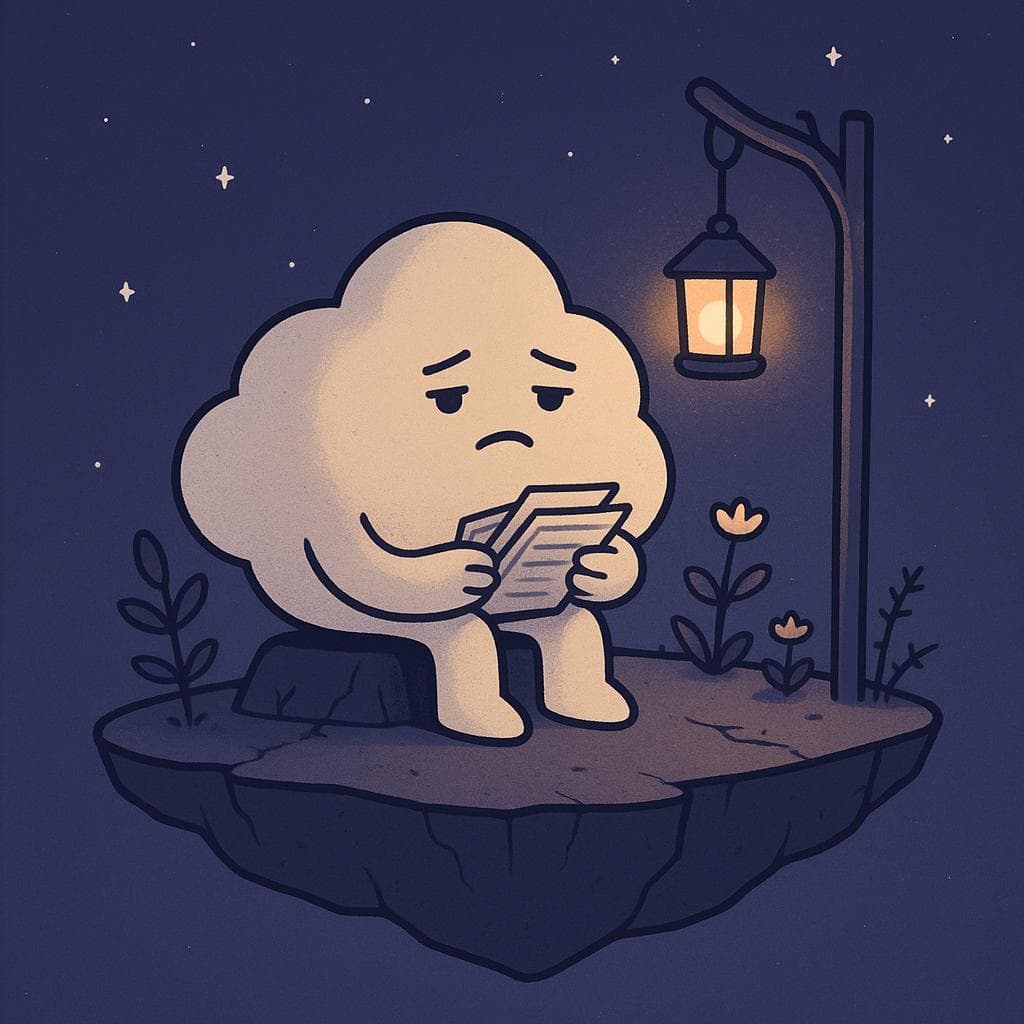
Money stress isn’t just “being bad with finances.” It’s a full‑body experience—especially when you’re young, still figuring life out, and already juggling anxiety or ADHD.
The emotional load
For many students, loans feel less like “a tool for opportunity” and more like:
- A countdown clock until repayment
- A constant weight in the back of your mind
- A quiet voice saying, “You better not mess this up”
College surveys have found that over 60% of students meet criteria for at least one emotional challenge in a given year (APA, 2022). That means a lot of people are already stretched thin before you even factor in thousands of dollars of debt.
When you’re carrying that plus:
- Pressure to “make college worth it”
- Fear of not landing a “good enough” job
- Guilt about parents co‑signing loans
- Social media flexing “success” you don’t feel close to
…it’s no wonder your nervous system is on edge.
Your brain on money anxiety
Money stress taps into the same systems that fire when you’re in danger:
- Your body stays in “fight or flight” mode
- Sleep gets lighter and more disrupted
- Focus and ADHD symptoms can get worse
- Small setbacks feel huge and personal
Untreated anxiety in Gen Z is linked to academic decline and sleep disturbance (Parents Magazine, 2025), which can make it even harder to do the very things that would help with money—like keeping up with classes or job applications.
You’re not “overreacting.” Your brain is responding to real uncertainty and risk.
Systemic, not just personal
It’s easy to think, “If I had just saved more, chosen differently, worked harder…” But zoom out:
- Tuition has climbed way faster than wages for years
- Many entry‑level jobs still expect degrees and unpaid experience
- Housing and living costs are high in most college towns and cities
You are trying to grow roots in rocky soil. That doesn’t mean you can’t grow—it means the environment is genuinely hard.
In summary:
Student debt is not just a number. It’s a chronic stressor that interacts with anxiety, low mood, and ADHD in very real ways. Naming that is the first step in not blaming yourself for struggling.
2. How Debt Stress Shows Up Day to Day
You might not walk around thinking, “I am distressed about student loans” 24/7. Instead, it leaks into everything.
In your body
Debt stress can feel like:
- Tight shoulders or jaw
- Stomach issues before checking your bank app
- Headaches after doing money tasks
- Racing heart when you see “payment due” emails
Chronic sleep issues make this worse. Research shows that teens and young adults with poor sleep report more mood swings and irritability (National Sleep Foundation, 2024). If you’re doom‑scrolling late at night because you’re worried about the future, your body never gets a real reset.
In your thoughts
Common thought spirals:
- “I’ll never get out of this.”
- “No one will hire me.”
- “I shouldn’t spend on anything fun.”
- “If I mess up, I’ll ruin my life.”
These thoughts feel logical in the moment, but they’re often “all‑or‑nothing” thinking—one of the patterns cognitive‑behavioural tools try to soften. (If you want more on that, we have a deeper guide on CBT techniques you can practice on your own.)
In your behaviour
Debt stress can push you into two opposite directions:
| Pattern | What it looks like | How it feels inside |
|---|---|---|
| Avoidance | Not opening loan emails, ignoring bank notifications | Temporary relief, then growing dread |
| Hyper‑control | Checking balances constantly, over‑restricting spend | Brief control, then burnout and shame |
Neither pattern is a character flaw. They’re both survival strategies your brain uses when something feels too big.
Example:
You get a “payment reminder” email. Your chest tightens. Instead of opening it, you swipe it away and scroll TikTok for an hour. Later that night, you lie awake thinking about how irresponsible you are.
What’s happening isn’t laziness—it’s your nervous system trying to protect you from a perceived threat. The problem is, avoidance keeps the fear alive.
In summary:
Debt stress is sneaky. It shows up as body tension, sleep issues, avoidance, or over‑controlling—not just “worrying about money.” Seeing those patterns clearly is key to changing them gently, not with shame.
3. Tiny Ways To Cope With Money Anxiety
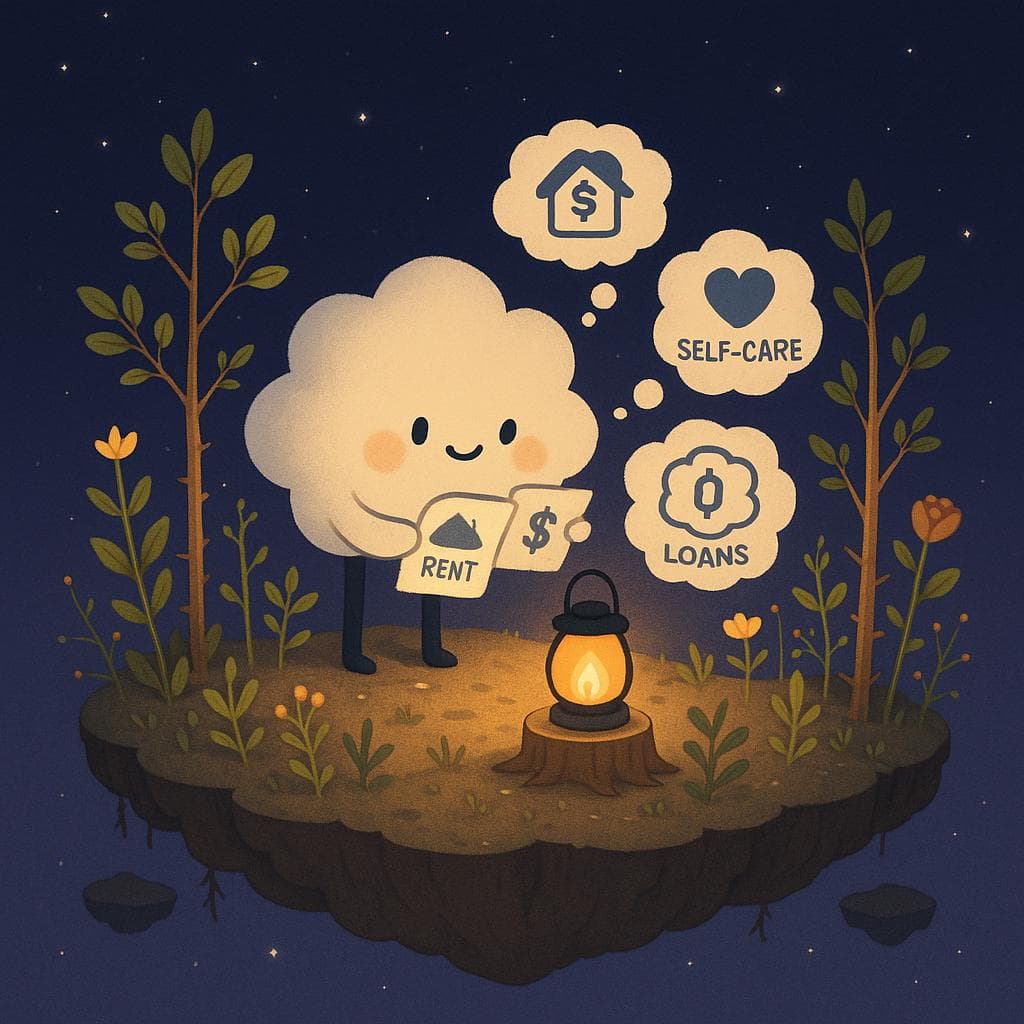
You don’t have to become a budgeting guru overnight. The goal is to move from “frozen and overwhelmed” to “a little more grounded and slightly more in control.”
Each of these steps is designed to take 1–5 minutes.
Ground your body first
Trying to do money tasks while your nervous system is spiking is like trying to garden during a storm. Start with your body.
-
Name three things you see
Look around and quietly name: “lamp, backpack, window.” This pulls your brain out of the future and into the room you’re actually in.
-
Do a 30‑second shake‑out
Stand up if you can and gently shake your hands, arms, and shoulders. Let your body release a bit of that “I’m in danger” energy.
-
Place a hand on your chest
Feel your hand rising and falling with your breath. You don’t have to breathe “perfectly”—just notice the movement for 5–10 breaths.
These micro‑grounding moves don’t erase the debt, but they make it easier to face it without shutting down.
Make money tasks tiny
Instead of “fix my finances,” try “one tiny money action.”
Pick one of these:
-
Open one email only
Not all of them. Just one loan or bank email. Your only job is to read, not to respond.
-
Check one number
Look at just your checking account balance, or just your current loan total. No math yet. Just information.
-
Rename the task
Change “deal with loans” to “5‑minute money check‑in” in your planner or phone. Your brain is more likely to start something that sounds small and specific.
-
Use a timer
Set a 3‑minute timer and tell yourself: “When this goes off, I can stop.” You can always keep going if you want, but you don’t have to.
Create a “money‑safe” ritual
Link money tasks with something kind, so they’re not just pure stress.
- Light a candle or turn on a cozy lamp when you sit down to check balances.
- Only drink your favourite tea during your money check‑in.
- Play one specific “money playlist” that feels calm or empowering.
This is behavioural activation in real life—pairing hard tasks with small sources of comfort to make your brain more willing to show up.
In summary:
You don’t need massive willpower. You need micro‑actions that your nervous system can actually tolerate. Ground your body, shrink the task, and pair it with something kind.
4. When You Can’t Afford Therapy
A lot of students are stuck in the worst combo: high emotional stress + low money + limited access to care.
More than 1 in 7 children and adolescents worldwide live with a diagnosed emotional or behavioural condition, and most never receive adequate treatment (UNICEF, 2023). In U.S. data, about 20% of adolescents reported unmet care needs in the past year (CDC, 2025). That pattern continues into young adulthood.
So if you’ve ever thought, “I need help, but I literally can’t afford therapy,” you’re far from alone.
Low‑cost therapy alternatives
You still deserve support, even if weekly private therapy isn’t an option right now.
-
Campus counseling
Many colleges include some counseling sessions in your fees. On a lot of campuses, about one in four students has used on‑campus counseling and around 12% have used tele‑counseling (American Psychiatric Association, 2023)—but two‑thirds use nothing at all.
If you’re on campus, you might have more access than you think. We have a full guide on making the most of campus counseling services.
-
Sliding‑scale clinics
Community clinics and training centers (where therapists‑in‑training are supervised) often offer sliding‑scale fees. You can search “sliding scale counseling + your city” and filter for people who work with students or young adults.
-
Support groups
These can be online or in person and are often free or low‑cost. They’re not the same as therapy, but they are structured spaces where you’re allowed to talk about money stress, family pressure, and low mood without pretending you’re fine.
Digital supports and self‑guided tools
If you’re looking for a therapy alternative or wellbeing help without insurance, digital tools can be part of your support system—not a replacement for professional care, but a bridge.
Helpful categories:
- CBT‑based apps that teach you how to challenge anxious thoughts and practice calming techniques
- Mood journal or CBT journal tools where you can track triggers, money worries, and small wins
- Gamified habit trackers that make tiny self‑care actions feel more rewarding
Research on digital CBT‑style tools for young people shows they can meaningfully reduce anxiety symptoms compared with doing nothing (Csirmaz et al., 2024). Again, not magic—but better than white‑knuckling it alone.
When to reach out anyway
Money stress can blend into low mood in ways that are easy to miss. Warning signs to pay attention to:
- You feel persistently down or hopeless most days
- Sleep, appetite, or energy have shifted a lot
- You’ve lost interest in things you used to enjoy
- You’re withdrawing from friends or skipping class
These are common early warning signs of emotional challenges in youth (American Psychiatric Association, 2024; NIMH/APA, 2024). If that sounds like you, it’s worth talking to a counselor, doctor, or trusted adult—even if you’re not sure “it’s bad enough.”
In summary:
“Can’t afford therapy” doesn’t have to mean “I get no help.” Combining low‑cost services, digital tools, and tiny daily practices can still support your emotional wellbeing while you navigate student debt.
5. Protecting Your Wellbeing While in Debt
You don’t have to wait until you’re debt‑free to feel more stable. Think of your emotional wellbeing as a garden you’re tending during the storm, not after it.
Build a “money‑day” self care routine
On days you deal with finances—paying bills, checking loans—have a simple before/after plan.
Before:
- 1–2 minutes of grounding (hand on chest, name three things you see)
- Decide one money task (e.g., “check my loan balance”)
- Set a short timer
After:
- Do something physically comforting (stretch, shower, change clothes)
- Eat or drink something nourishing, even if small
- Write one line in a mood journal: “Money task I did today: ___ / How I feel: ___”
This turns “money day” from a black hole into something with a clear start and end.
Use tiny habits to balance the stress
Debt is long‑term. So are the habits that help you survive it.
Here are tiny habits that take under 5 minutes:
-
Two‑line check‑in
Every night, jot down:
- “One thing that stressed me today: ___”
- “One thing that helped even a little: ___”
-
30‑second budget glance
Open your banking app, glance at the balance, and close it. That’s it. You’re training your brain that looking at money doesn’t always equal panic.
-
Future‑you kindness
Lay out clothes or pack a snack for tomorrow’s class or shift. Financial stress is easier to handle when basic logistics are a bit smoother.
For ADHD brains, these habits work best when they’re anchored to something you already do (like brushing teeth or making coffee). They’re not about being “disciplined”—they’re about giving your nervous system small, predictable anchors.
Rewriting the story in your head
Student debt can quietly become part of your identity: “I’m bad with money,” “I’ll always be behind,” “I’m failing at adulthood.”
Try gently shifting the script:
- From “I’m drowning” → “I’m in a hard season and I’m learning how to swim.”
- From “I’ll never pay this off” → “I don’t know how long it will take, but I’m taking steps.”
- From “Everyone else is ahead” → “Everyone has invisible struggles. This is one of mine.”
You don’t have to believe these new thoughts 100%. Just trying them on begins to loosen the grip of the old ones.
In summary:
Debt is a long game. Tiny, repeatable habits—grounding, journaling, future‑you kindness—are how you protect your emotional roots so you can keep growing, even in rocky financial soil.

6. Moving Forward (Without Toxic Positivity)
You’re allowed to be angry about student debt. You’re allowed to feel scared, resentful, or exhausted by how expensive it is just to try to build a life.
At the same time, you deserve tools that make this season even a little bit more bearable.
Quick recap:
- Student debt stress is a systemic issue that lands directly on your nervous system—it’s not a sign you’re weak or “bad with money.”
- Money anxiety shows up in your body, thoughts, and behaviour, often as avoidance or hyper‑control.
- Tiny grounding practices and 5‑minute money tasks can reduce the feeling of being completely overwhelmed.
- If you can’t afford traditional therapy, there are therapy alternatives—campus services, sliding‑scale clinics, peer support, and digital tools—that still help.
- Building a gentle self care routine around money days protects your emotional wellbeing while you slowly work through debt.
One concrete next step:
Pick one tiny action from this article that feels doable in the next 24 hours. Not all of them—just one. Maybe it’s:
- Opening a single loan email
- Doing a 3‑minute grounding exercise before checking your bank app
- Writing a two‑line mood and money check‑in tonight
Whatever you choose counts. It’s a seed.
If you want a gentle place to track those seeds—your tiny habits, money‑day rituals, and emotional check‑ins—Melo Cares can help you tend to yourself one small step at a time, turning those invisible efforts into a garden you can actually see.
Note: This article is for education and support, not a substitute for professional care or financial advice. If your anxiety, low mood, or money stress feels unmanageable, consider reaching out to a counselor, doctor, or trusted professional for more personalized support.
