
Setting Boundaries Without Feeling Like an Asshole
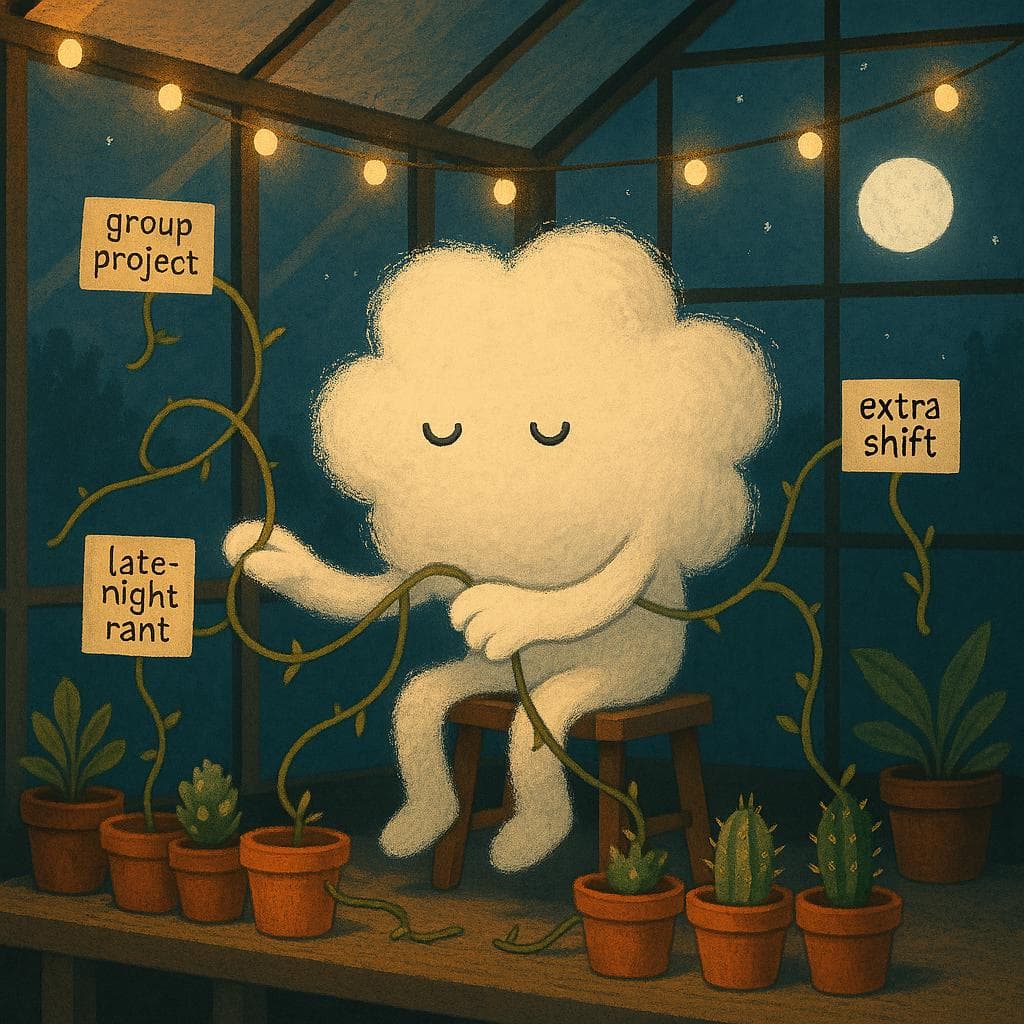
You say “yes” to helping with a group project even though you’re already drowning. You answer your roommate’s 1 a.m. rant when you’re half-asleep. You agree to cover a shift, go to the event, check your friend’s essay—then feel resentful, exhausted, and weirdly…like you’re the bad guy for even thinking about saying no.
If setting boundaries makes you feel selfish, rude, or like an asshole, you’re not alone. A lot of Gen Z and college students were never taught how to protect their energy without feeling like they’re abandoning people.
This guide is here to show you how to set boundaries in a way that’s kind, clear, and actually doable—especially if you deal with anxiety, ADHD, or low mood.
Key Takeaways:
✓ Feeling guilty about boundaries is normal—your brain is trying to protect you from rejection, not tell you that you’re a bad person
✓ Clear, simple boundaries usually reduce drama and anxiety over time, even if they feel uncomfortable at first
✓ You can use “soft but firm” scripts to say no, ask for space, or change your mind without over-explaining
✓ Boundaries are about what you will do (your limits), not about controlling other people’s behavior
✓ Tiny, low-stakes boundary experiments build confidence so you can protect your time, energy, and emotional wellbeing in bigger situations later

1. Why boundaries feel so hard
If saying no makes your stomach drop, it’s not because you’re weak or “too sensitive.” It actually makes a lot of sense.
Your brain hates rejection
Humans are wired to stay connected to the group. Your brain treats disapproval like danger. For people with anxiety or ADHD, that “danger alarm” can be extra loud:
- Anxiety might say: “If you say no, they’ll be mad and leave.”
- Low mood might say: “You’re already a burden, you can’t add more.”
- ADHD might say: “You’ve already disappointed people before—better just say yes.”
Research backs up how common emotional struggles are in young people. Globally, low mood, anxiety and behavioural challenges are among the leading causes of difficulty in adolescents (WHO, 2025). In the U.S., about 33.8% of young adults 18–25 had some kind of emotional condition in the past year (SAMHSA, 2024). So if you feel overwhelmed by other people’s expectations, you’re very much not the only one.
Family and culture scripts
You might have grown up with messages like:
- “Don’t be rude.”
- “Family comes first, always.”
- “You’re the responsible one.”
- “Be nice. Don’t make a scene.”
When you try to set a boundary now, those old rules can pop up as guilt. It can feel like you’re breaking some invisible law, even when your boundary is totally reasonable.
ADHD, anxiety, and people-pleasing
If you have ADHD, you might:
- Say yes impulsively, then regret it later
- Underestimate how long things will take
- Feel intense rejection sensitivity when someone is upset
If you deal with anxiety, you might:
- Replay conversations in your head for hours
- Over-explain your boundaries
- Avoid saying anything until you snap or ghost
None of this means you’re doomed. It just means you need boundary tools that are extra simple, repeatable, and gentle on your nervous system.
2. What boundaries actually are (and aren’t)
A lot of boundary guilt comes from misunderstanding what boundaries even mean.
Boundaries are about you
Boundaries are the limits you set on what you’re willing to do, tolerate, or give.
They sound like:
- “I can’t talk about this right now. Can we check in tomorrow?”
- “I’m not able to help with this project.”
- “If you yell at me, I’m going to leave the room.”
They’re about your actions—not controlling someone else.
Not walls, not ultimatums
Boundaries are not:
- ❌ “You have to text me back in 5 minutes or we’re done.”
- ❌ “You’re not allowed to hang out with them.”
- ❌ Silent treatment with no explanation.
Healthy boundaries can sound like:
- ✅ “I feel anxious when I don’t hear from you all day. I’d like to at least check in once.”
- ✅ “I’m not comfortable talking about my grades right now.”
- ✅ “If you keep cancelling last minute, I’ll stop making plans in advance.”
Why they help your emotional health
Without boundaries, it’s easy to slide into burnout, resentment, and low mood. College surveys have found that over 60% of students meet criteria for at least one emotional challenge in a given year (APA, 2022). Constantly over-giving and under-resting absolutely feeds into that.
Boundaries are one way of saying to yourself: “My time, energy, and feelings matter too.” That’s not selfish—that’s basic emotional hygiene, like washing your hands.
3. Tiny boundary experiments (low-stress practice)
You don’t have to start with a massive confrontation. Think of boundaries like planting small seeds in your garden—start with one or two and see what grows.
Step 1: Start where the stakes are low
Pick one area that feels annoying but not terrifying. For example:
- Group chats
- Favors in class
- Roommate noise
- Family texting during study time
Then try one tiny shift.
Example: group chat overwhelm
“I mute the group chat after 10 p.m. If it’s urgent, call me.”
You don’t owe a whole speech. One sentence is enough.
Step 2: Use “delay” as a mini boundary
If “no” feels impossible, try “not right now.”
You can say:
- “Let me check my schedule and get back to you.”
- “I need a minute to think about that.”
- “I’m not sure I have the energy for that this week.”
This gives your nervous system time to calm down so you can decide what you actually want, instead of panic-yes-ing.
Step 3: Practice saying no without a TED Talk
You’re allowed to keep your no short. Over-explaining usually makes you more anxious, not less.
Try these templates:
- “I can’t this week, but I hope it goes well.”
- “Thanks for asking, but I’m not able to.”
- “I’m focusing on school right now, so I’m saying no to extra things.”
Notice how none of these:
- Attack the other person
- Apologize 12 times
- Promise future yeses you don’t mean
Step 4: Use “I” statements
“I” statements keep things grounded in your experience instead of blaming.
| Blame-y version | Boundary version |
|---|---|
| “You’re so clingy.” | “I need some alone time tonight.” |
| “You never listen.” | “I feel overwhelmed when I’m interrupted. I’ll finish and then listen to you.” |
| “You’re always late.” | “If you’re more than 15 minutes late, I’ll start without you.” |
This doesn’t guarantee they’ll love your boundary, but it makes you more confident that you were clear and respectful.
If you want more ideas on protecting your energy, you might like our post on how to rest when you feel guilty about resting.
4. Scripts for common boundary moments
Let’s get super concrete. Here are some “copy-paste” style lines you can adapt.
Academic and work stuff
When a classmate wants your notes (again):
- “I’m not sharing my full notes anymore, but I’m happy to clarify one or two concepts.”
- “I put a lot of time into these, so I’m keeping them for myself.”
When your boss texts outside hours:
- “I saw this come in, I’ll handle it tomorrow during my shift.”
- “I don’t check work messages after 7 p.m., but I’ll look first thing in the morning.”
When a group project is unbalanced:
- “I’m willing to do X and Y. I’m not able to take on Z as well.”
- “I’ve already finished my part. If it’s not done by tomorrow, I’ll let the professor know what I contributed.”
Friends and social life
When you don’t have energy to hang out:
- “I’m low on energy tonight, so I’m staying in. Rain check?”
- “Social battery is dead, but I’d love to voice note tomorrow.”
When someone trauma-dumps on you:
- “I care about you a lot, but I don’t have the capacity for heavy stuff tonight.”
- “This sounds really hard. I’m not the best support for this level of stuff, but I can help you look for resources.”
When you need texting space:
- “If I don’t reply right away, it’s not personal—I’m trying to be on my phone less.”
- “I can’t text all day, but I’d love to catch up later.”
For more ideas on protecting your emotional energy online, check out our guide on digital detox and breaking the doomscroll habit.
Roommates and living situations
Noise and space:
- “I need quiet after 11 p.m. Can we keep music to headphones after that?”
- “I’m using the common area to study from 3–5. Could you keep it free then?”
Shared items:
- “I’m not comfortable sharing my food. Please ask before taking anything.”
- “I’d like my room to be my private space—can you knock before coming in?”
5. Handling guilt, anxiety, and pushback
Even with perfect wording, your body might still freak out. That doesn’t mean you did it wrong.
Guilt doesn’t mean you’re wrong
Guilt is often just your nervous system reacting to doing something new.
You might notice:
- Tight chest
- Racing thoughts
- Urge to send a follow-up “actually it’s fine!” text
Try this 30-second reset after setting a boundary:
- Put one hand on your chest, one on your stomach.
- Inhale through your nose for 4 seconds.
- Exhale slowly for 6 seconds.
- Repeat 3–5 times.
You’re teaching your body: “We can survive someone not being thrilled with us.”
When people push back
Some people will test your limits, especially if they’re used to you always saying yes.
Common reactions:
- Guilt-tripping: “Wow, you’ve changed.”
- Minimizing: “It’s not a big deal, just do it.”
- Anger: “You’re being dramatic.”
You can respond with a broken-record approach:
- “I get that you’re disappointed. I still can’t do it.”
- “I hear you. My answer is still no.”
- “I care about you, and I need to stick with this boundary.”
You’re not responsible for managing every feeling they have about your limit.
When you overcorrect
Sometimes, after years of people-pleasing, you swing the other way and go full “I don’t owe anyone anything.” That’s understandable too—your system is trying to protect you.
If you notice that, you can gently adjust:
- “I snapped earlier. What I meant was: I need more space tonight.”
- “I was sharper than I wanted to be. My boundary is still the same, but I’m sorry for how I said it.”
Repair is allowed. Boundaries aren’t ruined just because the first attempt was messy.

6. Building a boundary-friendly life
Boundaries aren’t one big conversation; they’re lots of tiny choices over time. Think of it like tending a garden: small, consistent actions shape the space you live in.
Make a “baseline boundary” list
Try writing down 3–5 non-negotiables that protect your emotional wellbeing. For example:
- “I don’t respond to messages during lectures.”
- “I don’t talk about grades with extended family.”
- “I don’t loan money I can’t afford to lose.”
- “I need at least one night a week with no plans.”
You can keep this list in your notes app or journal. It’s easier to defend a boundary you’ve already decided on than to invent one mid-panic.
If you like structured reflection, our post on building a wellbeing routine that actually sticks walks through how to turn these into small daily habits.
Celebrate tiny wins
Your brain might only notice the times you didn’t set a boundary. Try tracking the opposite:
- “I said no to a favor I didn’t have energy for.”
- “I paused before agreeing.”
- “I told my roommate I needed quiet.”
These are small, but they’re real. Over time, they add up to a life where you’re not constantly overextended.
When to get extra support
If boundary-setting brings up intense fear, shame, or conflict—especially with family or partners—it can help to talk with a counselor or therapist. You don’t have to do the emotional heavy lifting alone.
This article is for general wellness support only and isn’t a substitute for professional care. If your relationships feel consistently unsafe or overwhelming, reaching out to a qualified therapist or counselor for personalized support is a strong, valid step.
7. Conclusion
You’re not an asshole for needing space, rest, or limits. You’re a human with a nervous system that can only handle so much.
Boundaries:
- Protect your energy so you don’t burn out
- Make relationships more honest and sustainable
- Help your anxiety calm down because expectations are clearer
You don’t have to transform overnight. Pick one tiny boundary experiment from this article and try it in the next week—maybe muting a chat after a certain time, or saying “Let me think about that” instead of auto-yes.
If you want a gentle place to track those tiny wins and see your progress grow over time, you can download Melo and start tending to your own little wellness garden—one boundary, one small act of self-respect at a time.
