
Dealing With Climate Anxiety and Existential Dread
If you’ve ever closed a climate article and just stared at the ceiling thinking, “What’s the point of anything?”, you’re not alone.
A lot of young adults are trying to get through finals, pay rent, and figure out careers while also carrying this background hum of “the planet is on fire.” It’s a lot for one nervous system.
This isn’t about convincing you everything is secretly fine. It’s about helping you carry the weight without it crushing your day-to-day life.
Key Takeaways:
✓ Climate anxiety and existential dread are understandable reactions to real problems, not proof that you’re “too sensitive” or broken
✓ Your brain isn’t built to handle endless global bad news—learning how to set boundaries with information is a legit coping strategy
✓ Tiny, local actions (like community, routine, and small climate choices) can reduce helplessness more than doomscrolling ever will
✓ You’re allowed to care about the planet and care about your own wellbeing—burning yourself out doesn’t help you or the climate
✓ Simple tools like journaling, nervous system calming, and gentle routines can turn vague dread into clearer, more manageable energy
Globally, low mood, anxiety and behavioural challenges are already among the leading causes of difficulty in adolescents and young adults (WHO, 2025). Add climate chaos and unstable futures on top of that, and it makes sense if your stress feels dialed up to 100.
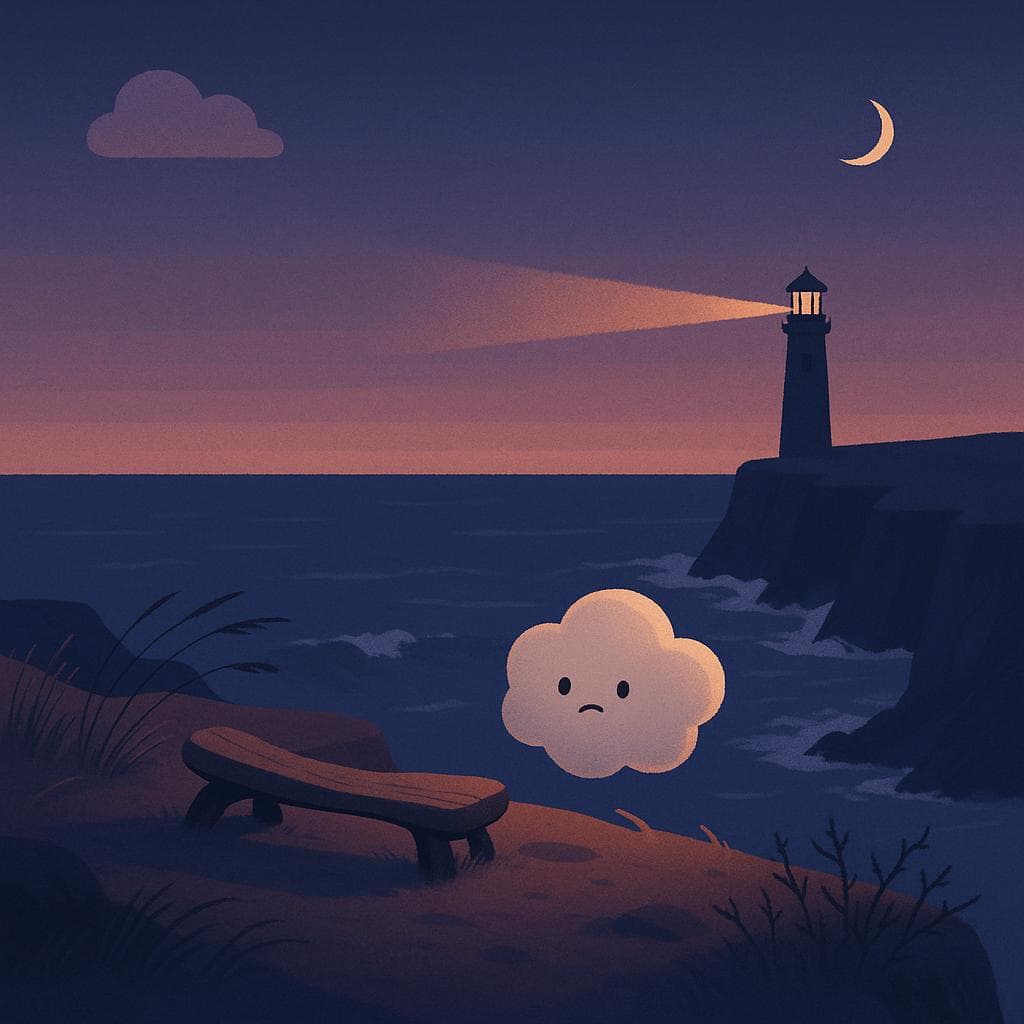
1. Why climate anxiety feels so heavy
Climate anxiety and existential dread usually show up as thoughts like:
- “What’s the point of planning for the future if everything’s collapsing?”
- “I should be doing more, but I’m exhausted.”
- “Everyone else seems fine—am I overreacting?”
- “I feel guilty for wanting normal things like travel or a nice life.”
Let’s break down what’s happening in your brain and body.
Your brain hates uncertainty
Humans like patterns and predictability. Climate change is the opposite: big, complex, and long-term. Your brain keeps trying to solve it like a homework problem it could finish today—and failing.
So it spins:
- Endless “what if” scenarios
- Late-night Googling about worst-case projections
- Guilt spirals about your personal choices
That spinning is your anxiety system trying (and failing) to find control.
Constant bad news overloads your system
According to the U.S. Surgeon General, children and adolescents who spend more than three hours a day on social media have roughly double the risk of experiencing emotional health problems like anxiety compared with lighter users (U.S. Surgeon General, 2025). Climate content is a big part of that feed.
Your nervous system is getting:
- Alarming headlines
- Disaster footage
- Hot takes and arguments
- “We’re doomed” memes (that are funny… but also not)
Your body reacts like the disaster is in the room with you, even when you’re just in bed with your phone.
It’s not just you being “dramatic”
Youth emotional challenges are already widespread. National data show that more than 1 in 5 U.S. adolescents had a diagnosed emotional or behavioural condition in 2023 (HRSA, 2024), and about 33.8% of young adults 18–25 had some form of emotional condition in the past year (SAMHSA, 2024).
You feeling overwhelmed isn’t a random glitch—it’s happening in a generation already under pressure from:
- Student debt
- Economic instability
- Social media
- Global crises (climate, politics, conflict)
You’re reacting like a human in a stressful environment. That’s actually very sane.
In summary: Climate anxiety is your brain trying to protect you from huge, uncertain threats with limited tools. You’re not weak or broken for feeling this way.
2. Naming what you’re feeling
When everything feels like one big “I can’t,” it helps to separate the strands a little. There are a few different things that often get lumped together as “climate dread.”
Climate anxiety vs. existential dread
They overlap, but they’re not exactly the same:
| Feeling Type | What it sounds like | Where it points |
|---|---|---|
| Climate anxiety | “What if things keep getting worse?” | Safety/control |
| Existential dread | “What does anything mean?” | Meaning/purpose |
| Guilt/shame | “I’m not doing enough / I’m a hypocrite.” | Self-worth |
You might feel all three in one day. That doesn’t mean you’re unstable—it just means your brain is trying different angles on the same fear.
Put it into one sentence
Shrinking the dread into words makes it less foggy.
Try this:
“Right now I’m mostly scared about ______, and underneath that I’m worried that ______.”
Examples:
- “Right now I’m mostly scared about wildfires, and underneath that I’m worried that my future kids won’t be safe.”
- “Right now I’m mostly scared about political inaction, and underneath that I’m worried that nothing I do matters.”
You don’t have to fix the sentence. Just write it in a notes app or on paper. That’s you acknowledging your inner world instead of letting it swirl.
For more ideas on how to do this in tiny, low-pressure ways, you can check out our guide on how journaling actually helps your wellbeing.
3. Tiny nervous-system resets
You can care deeply about the climate and admit: your body can’t live in crisis mode 24/7.
Think of these as 1–3 minute “water breaks” for your nervous system—small sips, not a full personality reboot.
1. The “one square meter” pause
Pick one tiny area around you—a corner of your desk, your lap, your pillow.
- Look at just that one square meter for 20–30 seconds.
- Name 3 things you can see (“blue pen, chipped mug, folded hoodie”).
- Notice one physical sensation (“the hoodie feels soft on my legs”).
You’re reminding your brain: “I’m here, in this room, not inside a news headline.”
2. 4–4 breathing (no perfection needed)
You don’t need a full meditation session. Try this once:
- Breathe in through your nose for a slow count of 4.
- Breathe out through your mouth for a slow count of 4.
- Repeat 3–5 times.
If counting stresses you out, just think: “slow in, slower out.”
3. Touch something alive
If you can, interact with something living:
- A houseplant
- Grass outside your building
- A tree on campus
- Even a pet
Gently touch a leaf or trunk and notice its texture. You’re literally connecting to the thing you’re worried about protecting—life—but in a calm, grounded way.
4. The “future you” micro-plan
When dread says “the future is pointless,” planning anything feels fake. So keep it tiny and near-term.
Write one thing you’ll do in the next 24 hours that’s just for you:
- “Make tea and watch one episode of my comfort show.”
- “Text my cousin a meme.”
- “Stand outside for 2 minutes between classes.”
You’re not pretending the world is fine. You’re saying, “My life still exists in this timeline.”
Example:
“Tomorrow between classes, I’ll stand under that big tree near the library for 2 minutes and just breathe.”
That’s it. No grand transformation. Just a small anchor in time.
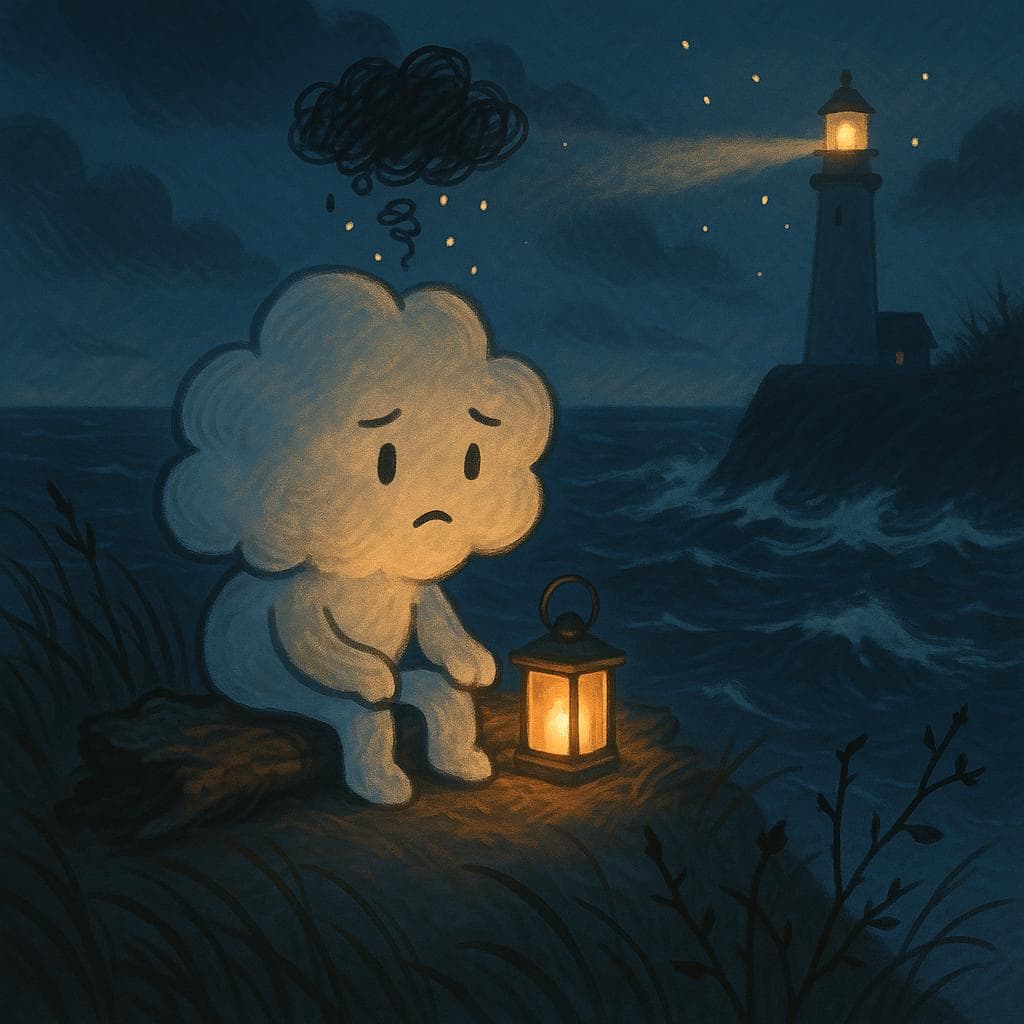
4. Setting boundaries with climate news
You can’t care about the planet if you’re too burnt out to function. Boundaries aren’t denial—they’re emotional sunscreen.
Notice your “too much” point
Pay attention to what happens after certain behaviors:
- After 30 minutes of doomscrolling, do you feel informed or paralyzed?
- After watching disaster videos, do you take more action or just shut down?
If you usually end up frozen, that’s your “too much” point.
Try “information windows”
Instead of climate content leaking into every hour of your day, give it a container.
- Pick a short window (like 10–15 minutes) once a day or a few times a week.
- Choose 1–2 trusted sources instead of endless scrolling.
- When the timer ends, gently close the tab or app.
You’re telling your brain: “We will come back to this, but not all day.”
Curate your feed (a little)
You don’t have to purge every account, but you can aim for balance:
- Keep: accounts that share action steps, solutions, and context
- Mute for now: accounts that only share worst-case scenarios or shame
✅ “Here’s how to talk to your local reps about climate policy.”
❌ “We’re doomed and no one cares, share if you agree.”
You’re allowed to protect your energy. You’re not less committed for doing so.
For more ideas on managing your relationship with your phone, you might like our piece on breaking the doomscroll habit.
5. Turning dread into small action
Existential dread loves the feeling of “nothing I do matters.” The antidote isn’t doing everything—it’s doing something and letting yourself count it.
The “sphere of control” check
Draw three quick circles on a page (they can be messy):
- Inner circle: “I can control”
- Middle circle: “I can influence”
- Outer circle: “Out of my control”
Now place specific things:
- “I can control”: how much I scroll, how I talk to friends, what I study, how I rest
- “I can influence”: campus organizations, local events, conversations with family
- “Out of my control”: global policies, other people’s reactions, the entire timeline of climate change
When your brain spirals about the outer circle, gently ask: “What’s one inner-circle thing I can do in the next 10 minutes?”
Tiny climate-aligned actions
These are not about fixing the planet solo. They’re about reducing helplessness and building a sense of alignment.
-
Learn one local fact
- Look up if your city or campus has a climate plan or sustainability office.
- Just find the webpage and skim the headings.
-
Send one message
- “Hey, would you ever want to go to a climate or sustainability event on campus with me?”
- Or: “Do you know if our campus has any climate clubs?”
-
Change one default
- Bring a reusable bottle tomorrow.
- Choose one day a week to skip meat.
- Turn devices fully off overnight once this week.
-
Bookmark one opportunity
- A local event, webinar, or campus group you might join later.
- You don’t have to commit—just bookmark or screenshot it.
Important: These are not moral tests. You’re not a better or worse person based on how many you do. They’re just small ways to tell your brain: “I am not powerless.”
Action vs. burnout
If your climate worry is making it hard to eat, sleep, or focus on school, that’s a sign to shift from “do more” to “protect my energy.” College surveys show that over 60% of students meet criteria for at least one emotional challenge (APA, 2022), and about two-thirds still don’t use any campus wellness resources (American Psychiatric Association, 2023).
You’re not failing if you need:
- Campus counseling
- Support groups
- Accommodations
- Time off from activism spaces
Caring about your own wellness is part of caring about the world.
For more on this, you might find what burnout looks like in Gen Z helpful.
6. Building a life that still feels worth living
Existential dread often whispers: “Why bother planning anything?” But building even a small, messy life you care about is one of the strongest antidotes to that feeling.
Think of your life like a garden in a changing climate. You can’t control the weather, but you can still:
- Choose what to plant
- Build some shade
- Ask neighbors to share tools
- Celebrate every sprout
Tiny meaning-building habits
You don’t have to find your “one big purpose.” Try micro-meaning instead.
-
One line meaning journal
At the end of the day, write one sentence:- “Today felt a tiny bit worth it when ______.”
- It can be as small as “my roommate made me laugh” or “the sunset was weirdly pretty.”
-
Weekly “care list”
Once a week, list 3 things you cared about:- A person
- A cause
- A moment That’s your proof that your heart is still engaged with the world.
-
Scheduled joy, not earned joy
Don’t make joy something you “earn” by being productive or perfect on climate stuff.✅ “Every Thursday night is silly YouTube night, no matter how the week went.”
❌ “I can only relax if I’ve been perfectly sustainable this week.”
Joy is not a betrayal of the planet. It’s fuel for staying engaged long-term.
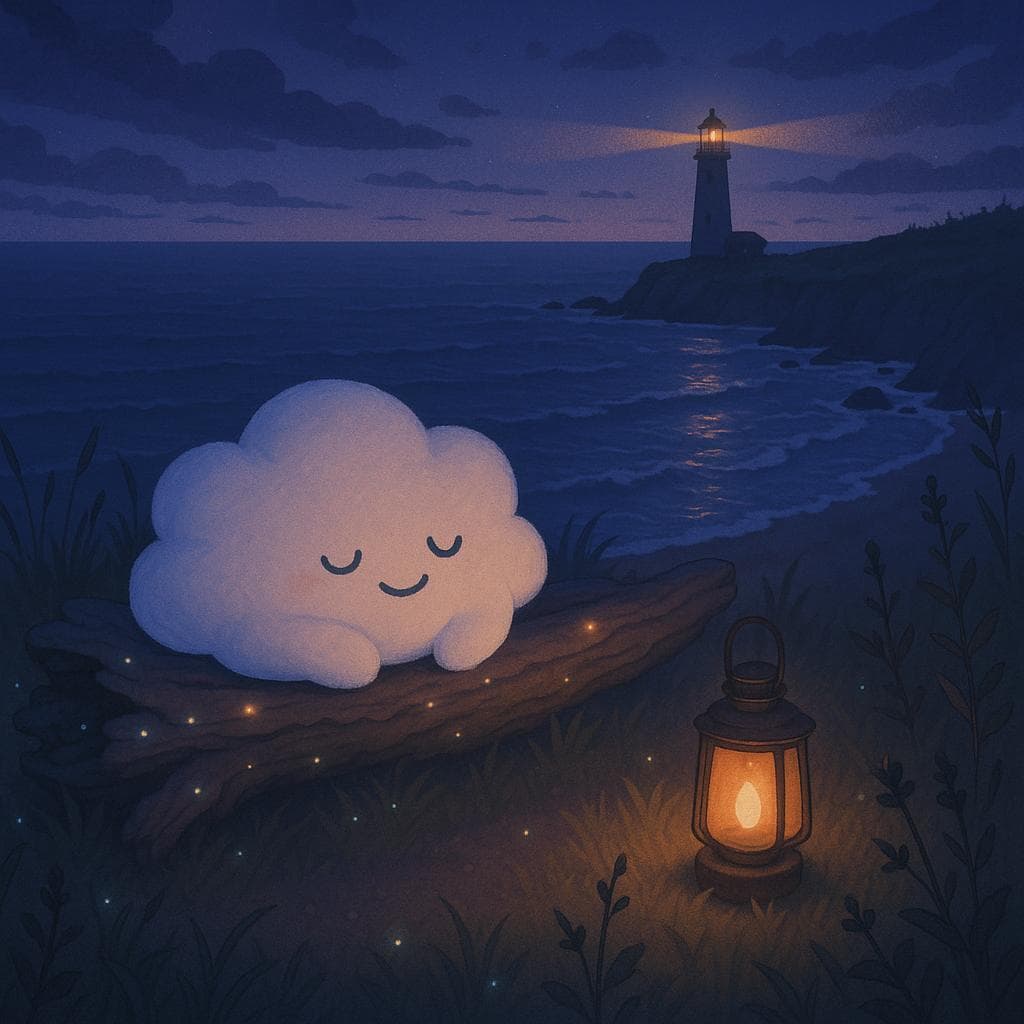
7. Conclusion: Tending your corner of the garden
You’re living in a time where young people are expected to:
- Fix problems they didn’t create
- Stay hopeful in the face of scary headlines
- Build a future while wondering what the future even looks like
Of course you feel heavy sometimes. Of course your brain gets stuck between “care a lot” and “I can’t do this.”
Here’s what you can carry forward:
- Your climate anxiety is a sign of your empathy, not a flaw.
- Your nervous system needs breaks from global crisis mode.
- Small, local actions and routines matter more than endless doomscrolling.
- You’re allowed to build a life with joy, connection, and rest—even in hard times.
One concrete next step:
Before you close this tab, write down one thing you’ll do in the next 24 hours that tends to you (not the planet). A snack, a nap, a walk, a text, a shower. That’s your first seed.
If you want a gentle place to track these tiny actions and see your care grow over time, you can download Melo and let your own little wellness garden remind you: even in a messy world, you’re still tending to yourself, one small sprout at a time.
Note: This article is for general information and support only and isn’t a substitute for professional care. If climate anxiety or existential dread are making it hard to function day-to-day, consider reaching out to a therapist, counselor, or another trusted professional for more personalized support.
